Articles
Everything we publish, by desk: the neuroscience of motivation and avoidance, the research on how high performers actually work, and the studies behind why capable people stall.
Brain & Behavior
The neuroscience of motivation, avoidance, and the threat-response system: why behaviors people treat as personal failings often look like a threat-detector doing its job.

Your Two Brains: The Higher Mind vs. the Threat-Detector
A capable person sits down to do important work and simply cannot start. The brain research has a measurable account of why, and it is not about willpower.

The Capable-Person Paradox: Why the Brain Treats Some Goals as Threats
The same person who would run toward danger without a second of hesitation can freeze on a task that carries no danger at all. The freeze is selective, and that single detail breaks the usual explanation.
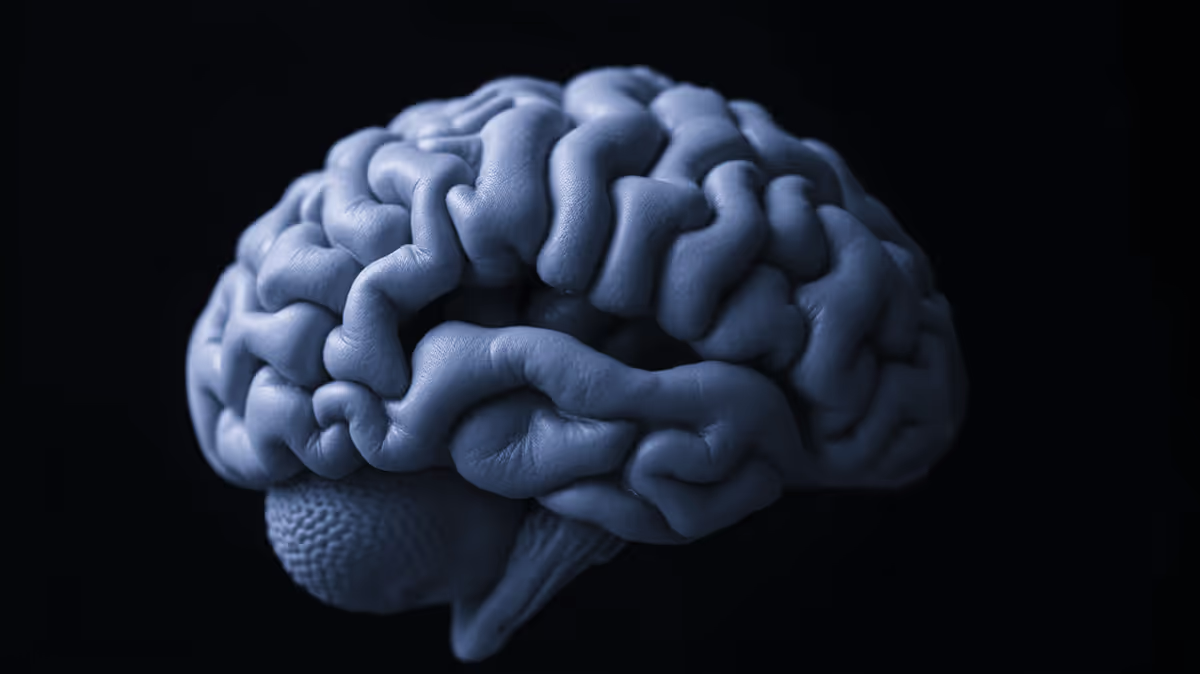
The Threat-Detector and the Executive: A Clean Look at What the Amygdala and Prefrontal Cortex Actually Do
Two structures in your brain run on different logic. When you know which one is driving, the thing you've been calling a willpower problem starts to look like something else.

The Brain Research That Explains Why Driven Entrepreneurs Get Stuck (And It Has Nothing to Do With Willpower)
Two different control centers in the brain compete for the same goal, and which one takes over decides whether you move or freeze. It turns on something most people have never measured in themselves.
Cognition & Performance
Decision science and the behavioral research on how high performers actually work, and what the evidence under the usual performance advice really shows.

Procrastination as a Signal: Reading the Brain's Threat Response Instead of Fighting It
For 30 years the productivity industry has sold procrastination as a discipline problem. The brain research points somewhere else entirely.

Why External Motivation Always Runs Out, and Inspiration Doesn't
Brain research points to a quieter explanation for the discipline you can't seem to summon: it isn't a willpower deficit. It's a signal about what the task is worth to you.
The Research Desk
New studies written up plainly, with attention to what the methods do and do not support. The publication's honesty mechanism.

How Behavior Reveals What We Actually Value
People are confident they know their own priorities. The evidence sitting in their calendars and bank statements often says otherwise, and a small field called axiology has spent its history trying to read that gap.

The Quiet Field Trying to Explain Why Capable People Stall
A small group of researchers and operators is applying axiology, the century-old science of values, to a problem the productivity industry keeps mislabeling. The evidence is starting to favor them.
Interviews
Conversations with the researchers and operators working in this area, and the people who lived the questions the research is trying to answer.

What the Research Finally Explained to the Founders Who Sat With It
We asked people who had run their own values assessment what the research clarified. The pattern in their answers was not motivation. It was recognition.